
Cancellation of at least Rs 3,000-crore worth of business has happened in the past few weeks.
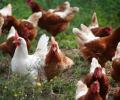
Farmers in the two states have reportedly begun culling chickens, while the state governments have restricted supply of chicken across their borders.
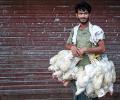
Weak demand from the poultry sector has resulted in a sharp decline in feed prices too, with both soybean and maize prices falling by nearly 25 per cent in the past two months. The poultry market consumes around half of soybean and maize production in India.
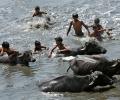
Since 2013-14, buffalo meat had been the largest export item in the agri commodity basket for a few years. Since the coronavirus outbreak in January, Indian exporters have received no fresh orders from Southeast Asian and West Asian countries, which cumulatively contribute nearly 65 per cent of India's overall buffalo meat shipment.
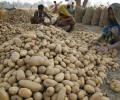
Farmers reported a massive crop damage in transit in addition to huge quantity of the potato left unharvested due to mud in the field.

'There is a clear business impact. People are avoiding crowded places and gatherings across cities. This is hitting business, both at traditional and modern trade outlets, during the Holi season, which kicked off from Saturday,' says Praveen Khandelwal, general secretary, Confederation of All India Traders (CAIT).
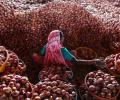
At the benchmark Lasalgaon Agricultural Produce Market Committee (APMC) mandi, the model onion price shot up to Rs 21.50 a kg on Thursday, as against Rs 16.50 a kg on Wednesday. This was the highest since February 11.

RIL's stake in Network18 would reduce to 64 per cent, from 75%, following the merger
The first to see price hikes will be soaps. In the past six months, domestic palm oil prices have increased by 46 per cent. Palm oil is a key input going into soaps.

Demand has also jumped from abroad, including the European Union and America.

Why millennials are choosing silver over gold this Valentine's Day.
Since coronavirus broke out in a few cities in China and a couple of cases were spotted in India as well, rumours claimed for the first time that it was carried by birds.
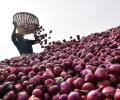
Data from the Nashik-based National Horticultural Research and Development Foundation showed that onion was trading at at Rs 24 a kg on Tuesday in the benchmark Lasalgaon mandi in Nashik district of Maharashtra. That's a fall of four per cent since Monday and 40 per cent from Rs 40 a kg on January 20, a level not seen since November 6, 2019. It continues to sell at Rs 40-44 a kg in retail markets across the country.
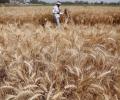
Data compiled by National Collateral Management Services (NCML, a non-government body) shows a 6.3 per cent rise to 109 million tonnes (mt). The Union ministry of agriculture's first advance estimate was 100.5 mt, as compared to 102 mt in last year's fourth advance estimate.

Experts feel that mall owners anticipate an increase in costs to the tune of 15-20 per cent annually, prompting a mixed response to the '24 hours' initiative. A mall owner said while the policy is good in spirit, implementing it would be a challenge as night shopping or eating out wasn't a habit in Mumbai yet.

'As long as people are eating we will be there,' Rebel Foods CEO Jaydeep Barman tells Viveat Susan Pinto and Niraj Bhatt.

Prices have continued to move up in Delhi's markets, wholesale and retail, on supply worries and spoilage due to record cold weather.
Mutton is retailing here at Rs 600 a kg, from Rs 500 a kg about a month before. Price of broiler chicken is Rs 150-160 a kg, as compared to Rs 130 a kg earlier.

Gold-silver ratio indicates more upsurge possible for the white metal.

While Unilever has been aggressive, both organically and inorganically in the country, P&G's approach has been about achieving 'balanced growth' in terms of top line and bottom line.
 © 2026 Rediff.com - Investor Information - Advertise with us - Disclaimer - Privacy Policy - Sitemap - Feedback - About us - Terms of use - Grievances